What is population health? Apparently it depends on who you ask. If you ask those with a financial stake in the current health care delivery system, population health means improving the health of patients who currently use (i.e., pay for) the system. You get a different answer if you ask those involved in public health, community development, or social services. They believe “population” should include everyone in the entire geographic community, whether or not those individuals are able to use or benefit from health care services. They also believe “health” should include quality of life and economic well-being – measures that prevent disease in the first place – and not just conditions addressed by the medical model of disease.
Continue Reading »
Looking back, it’s now obvious that the Lalonde report did initiate a change in our fundamental understanding of the determinants of health – an understanding that is now beginning to flourish. By stressing the influence of non-medical factors on population health, the report made it possible for governments, academics, and foundations to endorse practices outside conventional medical care. Medical practitioners are equally aware that health care by itself cannot secure a population’s health. Following the Lalonde report, politicians, health merchants, and mass media moguls seized on the idea of healthy lifestyles. They tried to convince us that personal responsibility was the primary determinant of health. In the end, however, I am cautiously optimistic that it is not their voices that will prevail.
Continue Reading »
Collectively, increased health consciousness was followed by increased health care costs. The promotion of healthy lifestyles was not the only reason health consciousness increased in the late 20th century. And there were, of course, many other forces at work that increased the costs of health care. But it seems fair to say that the new perspective on health ended up providing opportunities to expand the demand for more medical services. Any hope that individual responsibility for healthy lifestyles would reduce costs – still touted today by some politicians and health care economists — turned out to be a mirage.
Continue Reading »
Categories:
Health & Medicine,
History of Medicine,
Politics & Issues -
Tags: health care, healthism, healthy lifestyles, history of medicine, inequality, lifestyle, neoliberalism, politics, social determinants of health0 Comments -
Leave a comment! -
In the 1970s, public health policies began to promote the idea that individuals are responsible for their health and therefore have an obligation to adopt healthy lifestyles. Over the ensuing decades, health became an especially popular topic for media coverage as well as a lucrative market for vendors of health-related products and services. What followed was a substantial increase in health consciousness and greater anxiety about all things that concern the body. Do healthy lifestyles produce better health? That they should may seem like common sense, which is one reason it’s been so easy to promote the idea. The question is difficult to answer with absolute certainty, however.
Continue Reading »
Categories:
Health & Medicine,
History of Medicine,
Politics & Issues -
Tags: health care, healthism, healthy lifestyles, history of medicine, inequality, lifestyle, neoliberalism, politics, social determinants of health0 Comments -
Leave a comment! -
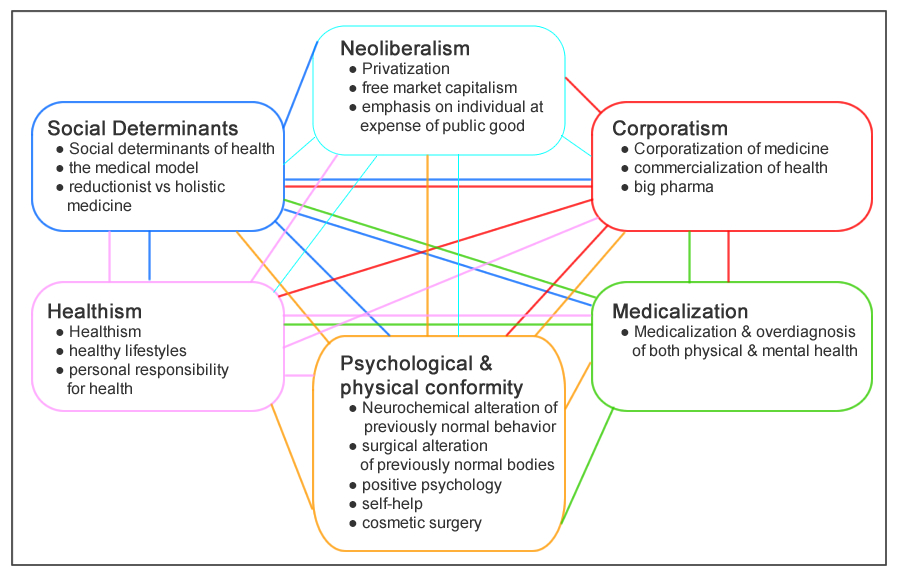
I was initially attracted to the subject of healthism because I felt I’d been a victim of health messaging. But I was also attracted by a sense that something deeper was going on. I now see that the taken-for-granted – the questions that don’t get asked in media coverage of health issues or in the policy positions of governments — unites my blogging topics. In whose interest is neoliberalism? Medicalization? Conformity? Non-holistic medicine? The commercialization of health? Healthism? More often than not the answer is that it’s not in my interest. Nor is it in the interests of the society I want to live in. And that makes these topics personally meaningful to me.
Continue Reading »
Categories:
Health & Medicine,
Politics & Issues -
Tags: corporations, cosmetic surgery, disease mongering, doctor/patient relationship, health care, healthism, healthy lifestyles, inequality, lifestyle, medicalization, neoliberalism, overdiagnosis, pharmaceuticals, politics, psychology & psychiatry, risk, social determinants of health1 Comment -
Leave a comment! -
~ Conformity and corporatism: Surgically altering one’s appearance (e.g., designer feet) presumably increases one’s chance of success in a society that commodifies bodies (i.e., in a society where salary, career advancement, social status and marriage prospects are influenced by appearance). Altering one’s personality with psychopharmaceuticals allows one to project the qualities necessary for success in a highly competitive society.
Continue Reading »
Categories:
Health & Medicine,
Politics & Issues -
Tags: corporations, cosmetic surgery, disease mongering, doctor/patient relationship, health care, healthism, healthy lifestyles, inequality, lifestyle, medicalization, neoliberalism, overdiagnosis, pharmaceuticals, politics, psychology & psychiatry, risk, social determinants of health2 Comments -
Leave a comment! -
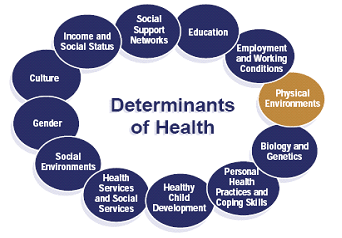
Social determinants of health (often abbreviated SDOH) refers to unequally distributed social and economic conditions that correlate with unequal and inequitable distributions of health and disease. Presumably there is a causal relationship between the two, not merely a correlation. Definitively identifying the causal mechanisms, however, is difficult. A great many things influence our health, including things we’re not even aware of yet, and it’s difficult to isolate and scientifically study the ones we can identify.
Continue Reading »
Categories:
Health & Medicine,
Politics & Issues -
Tags: corporations, cosmetic surgery, disease mongering, doctor/patient relationship, health care, healthism, healthy lifestyles, inequality, lifestyle, medicalization, neoliberalism, overdiagnosis, pharmaceuticals, politics, psychology & psychiatry, risk, social determinants of health0 Comments -
Leave a comment! -
It’s always hard to be sure about these things, but I think the reason I decided to take a ‘sabbatical’ from blogging last July was that I was interested in too many seemingly unrelated topics. Writing about all of them left me feeling like I never got to the ‘meat’ of any one of them. And I couldn’t convince myself to focus on just one or two things, since that would mean abandoning the others, which I was unwilling to do.
Continue Reading »
Categories:
Health & Medicine,
Politics & Issues -
Tags: corporations, cosmetic surgery, disease mongering, doctor/patient relationship, health care, healthism, healthy lifestyles, inequality, lifestyle, medicalization, neoliberalism, overdiagnosis, pharmaceuticals, politics, psychology & psychiatry, risk, social determinants of health2 Comments -
Leave a comment! -
By
Jan -
February 20, 2012
Our financially and professionally entrenched system of medical care has a vested interest in maintaining an understanding of health that preserves the status quo. Part of the power of our biomedical culture is that its contingency – the very real possibility that it could be different — is ordinarily invisible to us. What would it take to imagine a widely shared understanding of health that called for dramatic changes not only in how our health care needs are met, but in the conditions under which we live our lives? This is the question that I hope an examination of healthism will provoke.
Continue Reading »
Categories:
Aging Dying & Death,
Arts & Media,
Health & Medicine -
Tags: health care, healthism, healthy lifestyles, history of medicine, inequality, lifestyle, medicalization, overdiagnosis, politics, social determinants of health2 Comments -
Leave a comment! -
By
Jan -
February 20, 2012
Throughout history there’s been an understandable desire to find connections between our behavior and our health. Human beings have practiced health regimens involving diet, exercise and hygiene since antiquity. When medicine was based on the humoral theory of disease, for example, individuals were advised to purge the body in the spring and, in the summer, avoid foods or activities that caused heat. Bathing in ice water was recommended in the 19th century. Mark Twain quoted the advice: “the only way to keep your health is to eat what you don’t want, drink what you don’t like, and do what you’d druther not.”
Continue Reading »
Categories:
Health & Medicine,
History of Medicine,
Politics & Issues -
Tags: health care, healthism, healthy lifestyles, history of medicine, inequality, lifestyle, overdiagnosis, politics, social determinants of health9 Comments -
Leave a comment! -
Now The Globe and Mail Life section reveals I could be guilty of hastening my demise by eating fruit. See The New Enemy in today’s paper, which warns that bananas are the arch enemy of the serious dieter and “that the high fructose content makes grapes and cherries as unhealthy as a plate of cookies.” Or not. Depending on which ‘experts’ you believe.
Continue Reading »
In order to attain the corpore sano required by today’s fanatical health and hotness community you have to devote two or three hours a day to honing the body beautiful so that it contains no lumps, bra overhang or bits that have to be sucked in when you walk past a mirror. This involves lunges, squats, curls, lat pulldowns, pushups, bench presses and eventual death from exhaustion unless you are of that rare elite who are truly in The Zone.
Continue Reading »
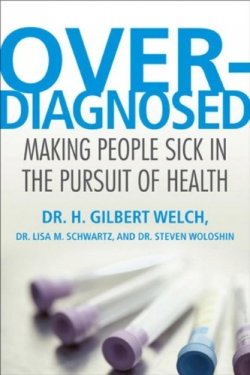
To be fair, many of these experts may be true believers, people who want to do everything they can not to miss anyone who could possibly benefit from diagnosis. But the fact that there is so much money on the table may lead them to overestimate the benefits and ignore the harms of overdiagnosis. These decisions affect too many people to let them be tainted by the businesses that stand to gain from them.
Continue Reading »
By the duty to be happy, I thus refer to the ideology peculiar to the second half of the twentieth century that urges us to evaluate everything in terms of pleasure and displeasure, a summons to a euphoria that makes those who do not respond to it ashamed or uneasy. A dual postulate: on the one hand, we have to make the most of our lives; on the other, we have to be sorry and punish ourselves if we don’t succeed in doing so. This is a perversion of a very beautiful idea: that everyone has a right to control his own destiny and to improve his life. How did a liberating principle of the enlightenment, the right to happiness, get transformed into a dogma, a collective catechism?
Continue Reading »
By
Jan -
February 16, 2011
History of Patient Modesty – Part 1: How Bodily Exposure Went from Unacceptable to Required (Patient Modesty & Privacy Concerns)
I have a guest post today on the #1 medical privacy blog. Part one describes what medicine used to be like before modern, anatomically-based theories of disease. Well into the 19th century, doctors did not expect patients to remove their clothes.
U.S. Raises Value of a Life, and Businesses Fear Impact (NYT)
How much should the government spend to prevent a single death? Environmental, consumer, and worker protection standards have been going up, despite protests from business.
Continue Reading »
By
Jan -
February 5, 2011
This delightful person, who signed off with “Yours fatly,” is a woman after my own heart. Her wise words took me back to a holiday in France, where the supermarkets were filled with full, fat, soft, unpasteurized cheeses, divine pastries, calorie and fat-laden crème fraiche and whole aisles of wine. I looked for low fat products and found one tiny, slender end-of-aisle display, where a small coterie of non-Europeans searched for fat-free yogurt and pre-packaged egg whites.
Continue Reading »