 Surveillance for Violent Deaths — National Violent Death Reporting System, 16 States, 2007 (CDC)
The latest official statistics on US violent deaths, including suicides, from the CDC. The report covers the year 2007, with information from 16 states. You might think the latest statistics would be more recent, but the CDC does an extensive amount of analysis. The report contains 39 tables that compare such things as the manner of death, the mechanism of injury, precipitating events, and whether more than one person was involved. Here’s a summary of the suicide analysis by age group and ethnicity (emphasis added):
Overall, the crude suicide rate was 11.6 per 100,000 population. The rate for males was more than three times that for females (18.4 and 5.0 per 100,000 population, respectively). Non-Hispanic whites accounted for the largest number of suicide deaths, and AI/ANs [American Indian/Alaskan Native] and non-Hispanic whites had the highest rates of suicide (18.2 and 14.0 per 100,000 population, respectively). The highest rates of suicide by age group occurred among persons aged 45–54 years, 75–84 years, and 35–44 years (17.6, 16.4, and 16.3 per 100,000 population, respectively). Children aged 10–14 years had the lowest rates of suicide among all age groups (0.8 per 100,000 population). Rates of suicide among adolescents aged 15–19 years (6.9 per 100,000 population) were approximately half of those for persons aged ≥30 years.
Suicide Rate Highest in Middle Age (MedPage Today)
A summary of highlights from the CDC report, including this observation:
Alcohol was a factor in about one-third of all suicides, and alcohol and drug abuse ranked second behind depression and other mood disorders as the most frequent risk factors for suicidal behaviors, the report authors wrote.
As Thomas Joiner writes in Myths about Suicide , the role of alcohol in suicidal behavior is complex. He cites an interesting study in which there was a high correlation between a mother’s consumption of alcohol and the suicide of an adolescent child. “[A]lcohol use is a signal of a deeper substrate of chronic risk – a risk that is passed on from parents to children. … [N]ot a lot of women [drink excessively]; for her to do so means that she has a severe underlying condition, and that severity is getting signaled to you [the child] either genetically or through family environment.”
Electronics Maker Promises Review After Suicides (The New York Times)
A report on employee suicides at Chinese company Foxconn, a major supplier of electronics for Apple, Dell, and HP. Run with “military-style” efficiency, employees work 12-hour shifts under constant camera surveillance. They live in cramped dormitories, with as many as 10 to a room. The dormitories house 330,000 to 400,000 people. In its defense, the company boasted that it provided recreational facilities, but the employees are too exhausted to use them. As of May 28, there had been 13 suicide attempts this year, ten of them successful and three with serious injuries. Employees jump from the upper floors of their dormitories. Foxconn is erecting netting.
Read more




 (originally published in 2000). Here’s a passage from the chapter “The Fat, Prosperous Elevation of the Average, the Mediocre.” (emphasis added in the following quotations)




 , which goes on sale this Thursday. I was pleased to see that this particular essay – on New York City — was not one that I’d already read in The New York Review, so there are more new essays to read. The New York piece is a good example of how superbly Judt could write.


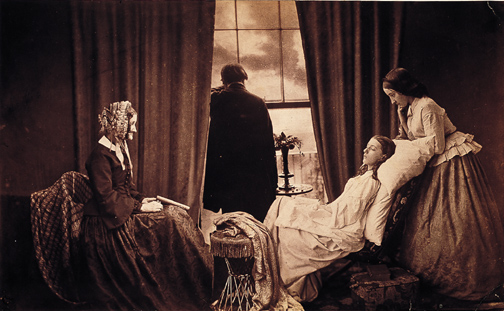





 of a polite and considerate young man who electrocuted himself and left a sign on his naked back, warning people not to touch him. “Do not touch me, please. Imminent danger of electrocution.” Nearby was a suicide manual that recommended the method and provided instructions.