Tag Archive: social media

Recommended (online) reading

Woman reading computerI’m still on “sabbatical.” Mostly reading. Thinking about what I most want to write about. I know what my interests are — the problem is, I have too many. Meanwhile, here are some blogs I enjoy reading.

Share

JAMA announces new editor-in-chief

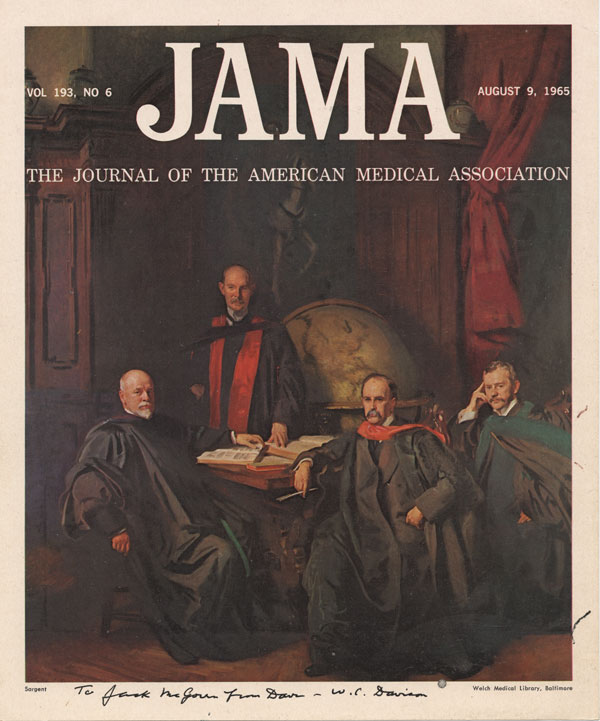
The Journal of the American Medical AssociationJAMA is much more stodgy than NEJM, at least in my opinion. During the presidential election and then during the debate over health care reform, NEJM published timely commentaries on the issues and made them available online to non-subscribers. It continues to cover topics such as the legal challenges to the health care bill. Not only does JAMA give less space to these issues. Articles in JAMA are not available online without a subscription ($165 for 48 issues).

Share

What the Internet does to the mind and self

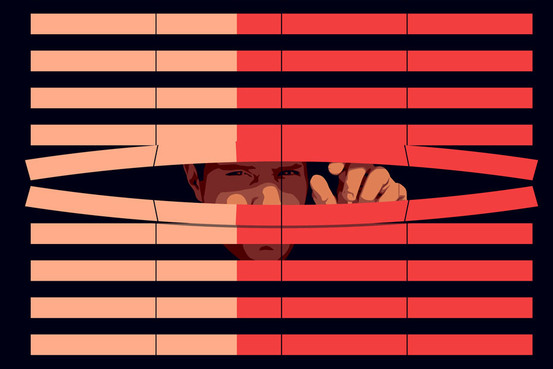
Internet addictionWhat we live in is not the age of the extended mind but the age of the inverted self. The things that have usually lived in the darker recesses or mad corners of our mind—sexual obsessions and conspiracy theories, paranoid fixations and fetishes—are now out there: you click once and you can read about the Kennedy autopsy or the Nazi salute or hog-tied Swedish flight attendants. But things that were once external and subject to the social rules of caution and embarrassment—above all, our interactions with other people—are now easily internalized, made to feel like mere workings of the id left on its own.

Share

WikiLeaks and modern medicine

Julian Assange[The 1971 Supreme Court decision on the Pentagon Papers] established the principle that it was illegal to leak secrets, but not to publish leaks. … The legal bargain from 1971 simply does not and cannot produce the outcome it used to. This is one of the things freaking people in the US government out — not that the law has changed, but that the world has, and the industrial era law, applied to internet-era publishing, might allow for media outlets which exhibit no self-restraint around national sensitivities, because they are run by people without any loyalty to — or, more importantly, need of — national affiliation to do their jobs.

Share

Wikileaks, nerd supremacy, anarchy, dictatorship, and democracy

The information machineThe flip side of responsibly held secrets … is trust. A perfectly open world, without secrets, would be a world without the need for trust, and therefore a world without trust. What a sad sterile place that would be: A perfect world for machines.

Share

Blogging: Time to get over it

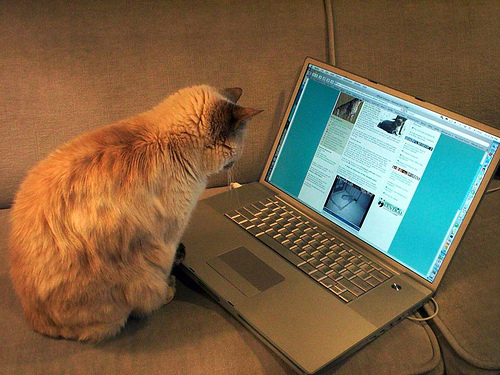
The blogging catWhen political and economic thinking became more conservative in the 1970s and 1980s, governments began to promote the idea that individuals were personally responsible for their health and should practice healthy lifestyles. A large segment of the population – mainly the educated and economically secure – welcomed these ideas. Feeling personally responsible for one’s health and practicing healthy lifestyles gives one the reassuring illusion of control. In particular, it’s a good distraction from the things that are beyond individual control, like salmonella in our peanut butter and the superbug MRSA at the gym.

Share

The end of privacy

The end of privacySome argue that social networking, and the web in general, encourages us to merge our identities – to no longer have separate selves for home, office, leisure, and friends. As the author points out, however, “a humane society values privacy, because it allows people to cultivate different aspects of their personalities in different contexts.”

Share

Check out this medical blog

Kevin Pho MDI have a post today at the blog KevinMD. … “An exemplary blog that features timely news and opinion of the latest in medicine, bringing in one of the most devoted audiences and keeping thousands of curious minds satisfied with smart and funny writing. While working on his own blog, Kevin has consistently promoted the rest of the medical blogosphere as a useful and reliable source for medical knowledge and opinion.”

Share

Cultural differences: Emoticons

And what’s the significance of the need to tilt your head to read western QWERTY emoticons, but the eastern ones are looking straight at you? Not what I’d expect culturally. But perhaps the difference here is that the western versions require fewer keystrokes – we’re in more of a hurry.

The Geographic points out that emoticons date back to 1881, when the American magazine Puck published “Typographical Art” for melancholy, indifference, astonishment, and joy. Emotions a bit more subtle than the ubiquitous smiley face, no?

Share

Why did health care reform fail? Lack of empathy

Source: The New York Times Continuing with Abigail Trafford’s analysis of health care reform, the next comparison between the Obama and Clinton failures is the ongoing empathy gap. Trafford describes an experience she had with supporters of Clinton’s health reform. In 1994 she traveled with the Health Security Express, a busload of individuals who suffered…

Share

FDA video on health fraud: So boring it makes you wonder

Source: Dipity The Food and Drug Administration (FDA) has a new video on health fraud awareness. A worthy topic. It touches on weight loss products, HIV scams, cures for cancer and diabetes. What’s noteworthy about the video is that it’s SO boring. The inflections of the voiceover are totally inauthentic. It has the pacing of…

Share

Daily Dose: Climate change: How bad can it get; FDR's death; Yawns; Facebook

Source: Sacramento for Democracy Climate change Copenhagen climate summit: Five possible scenarios for our future climate (The Guardian) Concise summary of what we can expect for each increase of one degree Celcius (1.8 degrees Fahrenheit) in global temperature. Here are a few of the health implications. 1C: “Most of the world’s corals will die, including…

Share

Health Culture Daily Dose #17

Additional stories related to health. Categories include: More articles on Health Care Reform, History of Medicine, Medical Journalism, Medical Technology, Medical News, Pharmaceuticals, Pop Culture, Social Media and the Internet, and The So-Called Obesity “Epidemic.” HEALTH CARE REFORM A ‘Common Sense’ American Health Reform Plan (The New York Times – Uwe Reinhardt) After studying this…

Share

Is it a stroke? Diagnosing by email

Source: Down Maine Veterinary Clinic Click photo for larger view. There’s an email that makes the rounds on the Internet about three signs for identifying a stroke: Can the person smile, raise both arms, and speak a simple sentence. “The Smile Test” was originally presented at a conference hosted by the American Stroke Association (ASA)…

Share

Is the Internet bad for your health?

Source: Mayo Clinic Do you research medical information on the Internet? Do you use Google as your starting point? Do you read entries on medical conditions at Wikipedia and assume what you read is accurate and complete? Kevin Pho, primary care physician and author of the popular medical blog KevinMD.com, has a column in USA…

Share

The video of Neda Soltan’s death

Source: The New York Times Even though I’ve been writing about Arash Hejazi (here and here), the doctor seen in the video of Neda Agha-Soltan’s death in Iran, I have to admit I still haven’t seen the video. I realized early on that I didn’t want to watch someone die a tragic and violent death….

Share