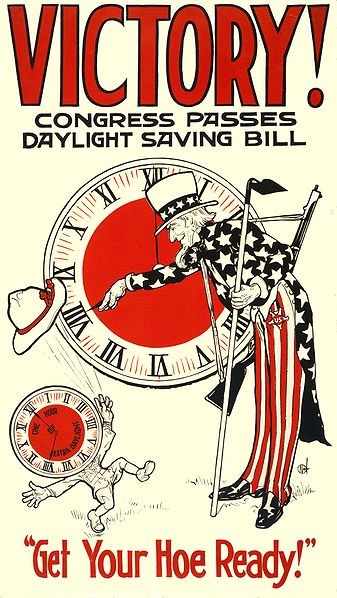
 1.6 billion people – almost a quarter of the world’s population – observe the biannual shifts between standard and daylight saving time. Does the loss of an hour’s sleep in the spring affect their health? According to a study published in The New England Journal of Medicine, there’s a statistically significant increase in the number of heart attacks (myocardial infarctions) in the week after we shift to daylight saving time.
Researchers in Sweden extracted statistics from 20 years worth of data on heart attacks. They compared the incidence of heart attacks during each day of the week after we change the clocks (both spring and fall) with the number of heart attacks two weeks prior to and two weeks after the time change.
There are always more heart attacks on Mondays, presumably connected to the stress of going back to work. But the number of Monday heart attacks was significantly lower following an extra hour of sleep in the fall. In fact, except for Fridays, the number of heart attacks was lower for the rest of the week. Following the loss of an hour’s sleep in the spring, heart attacks were up for the entire week, and the increase was especially significant on Tuesday.
Here’s the data displayed graphically.
Monday heart attacks and sleeping in on the weekend
These findings, of course, do not mean that losing an hour’s sleep causes a heart attack, but they do suggest that individuals who are vulnerable to heart problems might want to make the transition to daylight savings time gradual rather than abrupt. Read more